
Shoulder dislocation is one of the most painful and function-limiting orthopedic injuries, especially for active individuals, athletes, fitness enthusiasts, and people prone to accidental falls. The shoulder joint is the most mobile joint in the human body, which makes it highly vulnerable to slipping out of place during trauma or sudden forceful movement. For patients in Bhopal, shoulder dislocation is a common orthopedic problem that needs expert evaluation to prevent long-term damage such as instability, repeated dislocation, chronic weakness, and early arthritis. This is where the role of an experienced orthopedic surgeon becomes essential, and in Bhopal, Dr. Vivek Tiwari, one of India’s most highly trained joint replacement and sports injury specialists, provides advanced diagnosis and treatment at Apollo Sage Hospital. With training from AIIMS New Delhi and international centers in the USA, UK, Italy, Seoul, and Austria, he offers world-class care for all shoulder injuries, including complicated and recurrent dislocations.
For location, reviews and easy directions, you can also visit his official Google Business Profile here: https://g.co/kgs/BfFFm1z
What Is a Shoulder Dislocation?
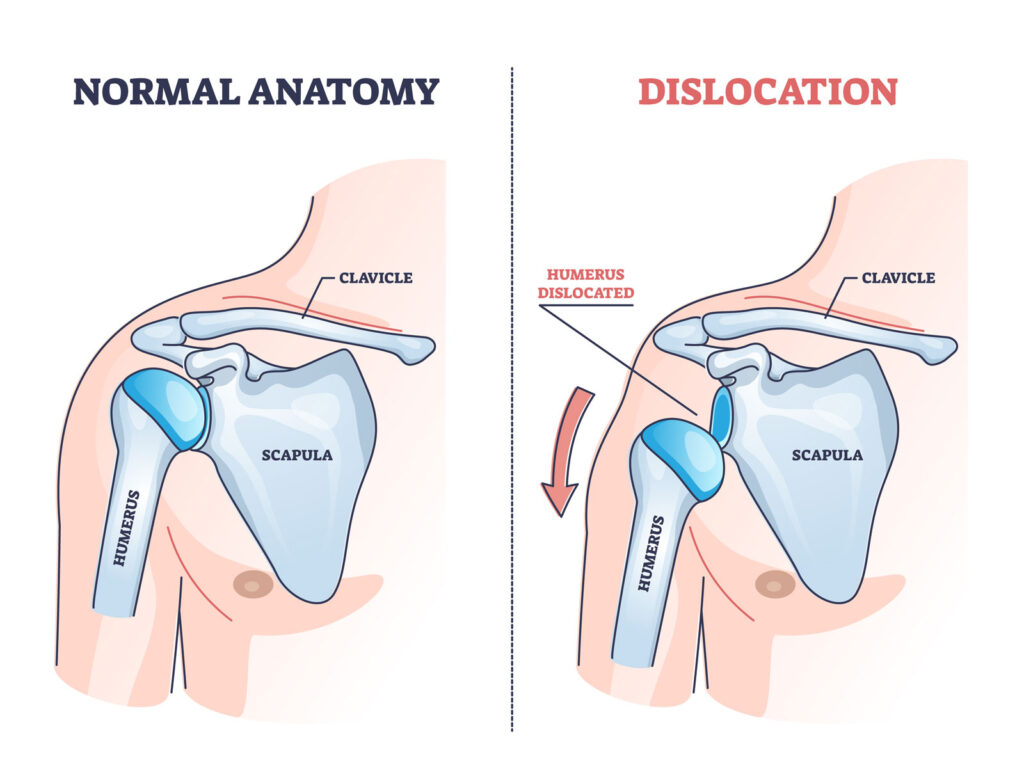
A shoulder dislocation occurs when the upper arm bone (humerus) comes out of the shoulder socket (glenoid). Because the shoulder joint is designed for a wide range of motion, it depends heavily on surrounding muscles, tendons, and ligaments to maintain stability. When these tissues experience sudden force—such as during sports, trauma, or falls—the ball of the joint slips out, causing immediate pain, swelling, deformity, and loss of movement. Many patients in Bhopal first try home remedies like hot packs or rest, but a true dislocation requires professional medical attention since improper handling can cause nerve damage, fractures, or long-term instability. Understanding the nature of the injury helps patients make informed decisions about treatment and recovery.
Types of Shoulder Dislocation
Shoulder dislocation can occur in several directions, each with different mechanisms and symptoms. The most common is anterior dislocation, where the humeral head shifts forward due to a sudden outward rotation of the arm. This type is frequently seen in contact sports like football, kabaddi, and wrestling, which are popular among youth in Bhopal. Posterior dislocation, although less common, typically occurs due to electric shocks, seizures, or trauma where the arm is pushed backward. Inferior dislocation is rare but extremely painful, where the arm is forced downward due to significant traction. Each type requires specific clinical evaluation, and the treatment plan varies based on the nature of the dislocation and the condition of the surrounding tissues.
Common Causes of Shoulder Dislocation
Shoulder dislocation can occur due to several reasons, making it one of the most frequently reported orthopedic emergencies at Apollo Sage Hospital. The most common cause is a fall—often on an outstretched hand—which can happen during daily activities or accidents. Sports and gym injuries are also major contributors, especially activities involving overhead movement or sudden changes in direction. Vehicular accidents, especially two-wheeler incidents, are another common cause in Bhopal. People with previously injured shoulders or weak ligaments are at higher risk of repeated dislocations, and young athletes are particularly susceptible due to high physical activity levels. Identifying the underlying cause helps prevent future episodes.
Symptoms of Shoulder Dislocation
The symptoms of shoulder dislocation are typically intense and immediate, making it easy for patients to identify that something is seriously wrong. The most prominent symptom is sudden, severe pain in the shoulder region, often accompanied by visible deformity where the shoulder appears flattened or out of place. The patient may not be able to move the arm at all, and any attempt to lift or rotate the shoulder increases the pain dramatically. Swelling, bruising, tingling, and numbness are common, especially if nearby nerves are affected. Some patients also report muscle spasms that worsen discomfort. Repeated dislocations may present with milder symptoms, but they still require medical attention to prevent long-term weakness.
How Shoulder Dislocation Is Diagnosed
Accurate diagnosis is crucial to ensuring proper treatment and preventing complications. At Apollo Sage Hospital in Bhopal, Dr. Vivek Tiwari conducts a detailed clinical examination that includes assessing the range of motion, visible deformities, nerve function, and muscle strength. X-rays are taken to check bone alignment and rule out associated fractures. In complex or recurrent cases, MRI is recommended to evaluate soft tissue damage, ligament tears, labral injuries, and rotator cuff involvement. Dr. Tiwari’s extensive training at AIIMS New Delhi, AIIMS Bhopal, and AIIMS Nagpur helps him identify subtle injuries that may be missed during routine evaluation, ensuring that every patient receives the correct treatment plan based on evidence and best practices.
Treatment Options for Shoulder Dislocation
Treatment for shoulder dislocation varies depending on whether the injury is first-time or recurrent. The initial step is reduction, a procedure where the displaced bone is gently guided back into its natural position. This must be done only by a trained orthopedic specialist to avoid nerve injury or additional fractures. After reduction, immobilization with a sling helps stabilize the shoulder and allow healing. Pain relief medications and anti-inflammatory therapy are used to reduce discomfort. In many first-time dislocations, non-surgical management with physiotherapy is effective in restoring movement and strength. However, for athletes, young patients, and those experiencing repeated dislocations, surgical intervention is often recommended.
Advanced Arthroscopic Surgery by Dr. Vivek Tiwari
For recurrent shoulder dislocation, arthroscopic stabilization surgery is the gold-standard treatment. Dr. Vivek Tiwari, trained in advanced arthroscopy and minimally invasive techniques at world-renowned centers such as HSS New York and MSKCC New York, provides cutting-edge surgical options in Bhopal. Arthroscopy involves tiny keyhole incisions, a camera, and specialized instruments to repair torn ligaments, strengthen the joint capsule, and restore natural stability. This technique results in minimal pain, minimal scarring, faster recovery, and better long-term outcomes compared to traditional open surgeries. Dr. Tiwari’s international fellowships across Seoul, Italy, and Austria further enhance his expertise in handling complex and recurrent shoulder instability cases with precision.
Why Choose Dr. Vivek Tiwari for Shoulder Dislocation Treatment in Bhopal?
Dr. Vivek Tiwari is one of the most qualified orthopedic and joint replacement surgeons in Bhopal, known for his expertise in sports injuries and minimally invasive shoulder surgery. He holds MS (Orth) from AIIMS New Delhi, along with top-tier qualifications including DNB (Orth), MNAMS, MRCS (Edinburgh, UK), FIJR (Seoul, Italy, Austria), IOA Travelling Fellowship, and the FIFA Diploma in Football Medicine. He has received advanced training in robotic joint replacement at HSS New York and bone tumor surgery at MSKCC New York. As Ex-Faculty and Unit Incharge at AIIMS Nagpur, he has treated thousands of complex cases with excellent outcomes.
He currently provides patient care at:
Department of Orthopaedics & Joint Replacement,
1 – Ground Floor, Apollo Sage Hospital, Bhopal, India
📍 GMB Link: https://g.co/kgs/BfFFm1z Website – https://www.drvivektiwariortho.com/
📞 Phone: 9868633097
This ensures convenience, easy navigation, appointment clarity, and trustworthy reviews for new patients.
Recovery After Shoulder Dislocation
Recovery after shoulder dislocation depends on the severity of the injury and whether surgery is required. Most patients begin with a period of immobilization, followed by physiotherapy to restore mobility, flexibility, and strength. Dr. Tiwari emphasizes customized rehabilitation plans, ensuring that patients regain full function without risking further damage. Athletes may require a more structured program to safely return to sports. Those undergoing arthroscopic surgery typically experience faster recovery and lower recurrence rates, thanks to precise soft tissue repair. Regular follow-ups help monitor progress and ensure long-term stability.
Prevention Tips for Shoulder Dislocation
Preventing shoulder dislocation involves building shoulder strength, improving flexibility, and avoiding risky movements during sports or exercise. Warm-ups and stretching before physical activity are essential. Proper technique during gym workouts, avoiding heavy overhead lifting without supervision, and using protective gear during contact sports can significantly lower the risk. Patients who have had previous dislocations must follow strengthening protocols recommended by Dr. Tiwari to prevent recurrence. Lifestyle modifications and regular physiotherapy sessions are especially beneficial for maintaining shoulder stability.
Conclusion
Shoulder dislocation can be a painful and recurring problem if not treated properly, but with timely evaluation and expert care, patients can achieve complete recovery and return to normal activities. With world-class training, years of experience, and access to advanced arthroscopic technology, Dr. Vivek Tiwari provides one of the most reliable and effective treatments for Shoulder Dislocation in Bhopal. If you or someone you know is experiencing repeated episodes of instability or severe shoulder pain, it is important to consult an experienced Shoulder Dislocation Surgeon in Bhopal for accurate diagnosis and long-term relief.
⭐ Frequently Asked Questions (FAQs)
1. Is shoulder dislocation a serious condition?
Yes, it requires urgent medical attention to avoid nerve damage, fractures, and long-term instability.
2. Can shoulder dislocation heal without surgery?
First-time dislocations often heal with immobilization and physiotherapy, but recurrent dislocations may require surgery.
3. How long does recovery take?
Recovery may take 6–12 weeks depending on injury severity and treatment approach.
4. Is arthroscopic surgery better for recurrent dislocation?
Yes, it offers better stability, shorter recovery time, and fewer complications.
5. What tests are needed to diagnose shoulder dislocation?
X-ray and MRI are commonly used to assess bone alignment and soft tissue injury.
6. Is shoulder dislocation common among athletes?
Yes, especially in sports involving overhead movements or contact.
7. Can shoulder dislocation happen again?
Yes, if not treated properly, recurrence is common, especially in young athletes.
8. Why choose Dr. Vivek Tiwari for treatment?
His AIIMS education, international training, and advanced arthroscopy expertise make him one of the best specialists in Bhopal.